

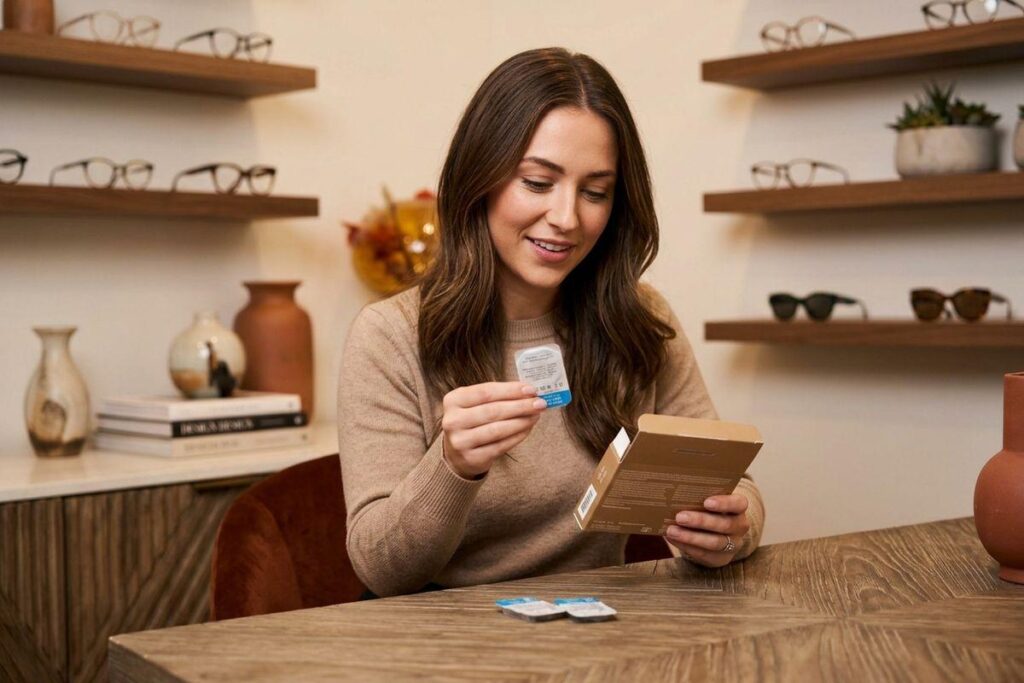
Contact lenses feel so simple to use that it’s easy to forget they come with an expiration date, much like a lot of things in your medicine cabinet. That little blister pack looks sealed and untouched, so it’s tempting to assume it’s fine no matter how long it’s been sitting there.
Yes, contact lenses do expire, and wearing them past that date can put your eye health at risk. If you’re already curious about your lens options, talking to your optometrist during a contact lens exam is a helpful place to start.
Why Contact Lenses Have an Expiration Date
The lens itself isn’t really what expires. Look at the saline solution sealed inside the blister pack instead, since that’s where the real issue lives.
Over time, that solution breaks down and loses its ability to keep the lens sterile and hydrated. The seal on the pack weakens with age, too, and even a barely visible crack can let bacteria or fungi sneak in.
Once you put that affected lens on your eye, you’re introducing those contaminants directly to one of the most sensitive surfaces on your body. Not exactly a risk worth taking for a spare pair of contacts.
Where to Find the Expiration Date
Check both the outer box and each individual blister pack for the date. Look for the letters “EXP” or a small hourglass symbol, usually followed by a YYYY-MM format or a simple month and year.
Compare the box and the pack, too. Individual packs occasionally differ from the box if lenses got repackaged or stored separately at some point.
Can’t read the date because the printing faded or the packaging got damaged? Toss the pack. A contact lens without a readable expiration date gives you no way to confirm it’s safe, and that’s not a gamble worth taking with your eyes.

What Happens If You Wear Expired Contacts
Your eyes tend to notice pretty quickly when something’s off. Watch for these signs within hours of putting in expired lenses:
- Blurry vision
- Feeling that the lens isn’t sitting right
- Irritation or a gritty, uncomfortable sensation
- Redness
- Increased sensitivity to light
Remove the lenses right away and switch to glasses if you notice any of these. Acting fast can help ease the discomfort before things get worse.
Leaving expired lenses in, or ignoring the early warning signs, can lead to more serious concerns:
- Bacterial or fungal eye infections that require treatment
- Corneal ulcers, which are open sores on the surface of the eye, can contribute to lasting vision damage
Corneal ulcers, in particular, are painful and slow to heal. Some cases affect vision long after the ulcer itself has cleared up.
What to Do If You Already Wore Expired Contacts
If you realize midday that your lenses are expired, act quickly. These steps can help protect your eyes from further irritation:
- Remove and discard the lenses immediately. Don’t hold onto them for later.
- Pay attention to how your eyes feel. Redness, pain, discharge, or vision changes mean it’s time to call your optometrist.
- Throw out any solution used with those lenses and swap in a new case. Bacteria can linger in both.
For guidance on proper lens care between visits, the American Academy of Ophthalmology’s contact lens care guide covers cleaning, disinfection, and storage in straightforward detail.
Keep Your Contact Lens Supply on Track
A little planning goes a long way toward avoiding this whole situation in the first place.
Your contact lens prescription runs separately from your glasses prescription, and it typically lasts 1 to 2 years. An outdated prescription means your lenses may no longer match your current vision, even when the packaging looks brand new. Book an eye exam every year to keep your prescription accurate and your eyes healthy.
A couple of simple habits make a difference, too:
- Schedule your next eye exam before you leave the office, so it’s already on the calendar.
- Set a phone reminder to reorder lenses a few weeks before your supply runs out, giving yourself a cushion before you’re left digging through the drawer.
Ready for a Fresh Pair?
Skip the guessing game with that mystery pack in the drawer. Book an eye exam and keep your prescription current, your eyes comfortable, and your vision sharp.
OPT Optometric offers a personalized, unhurried experience for every visit, so schedule your appointment today and give your eyes the care they deserve.