

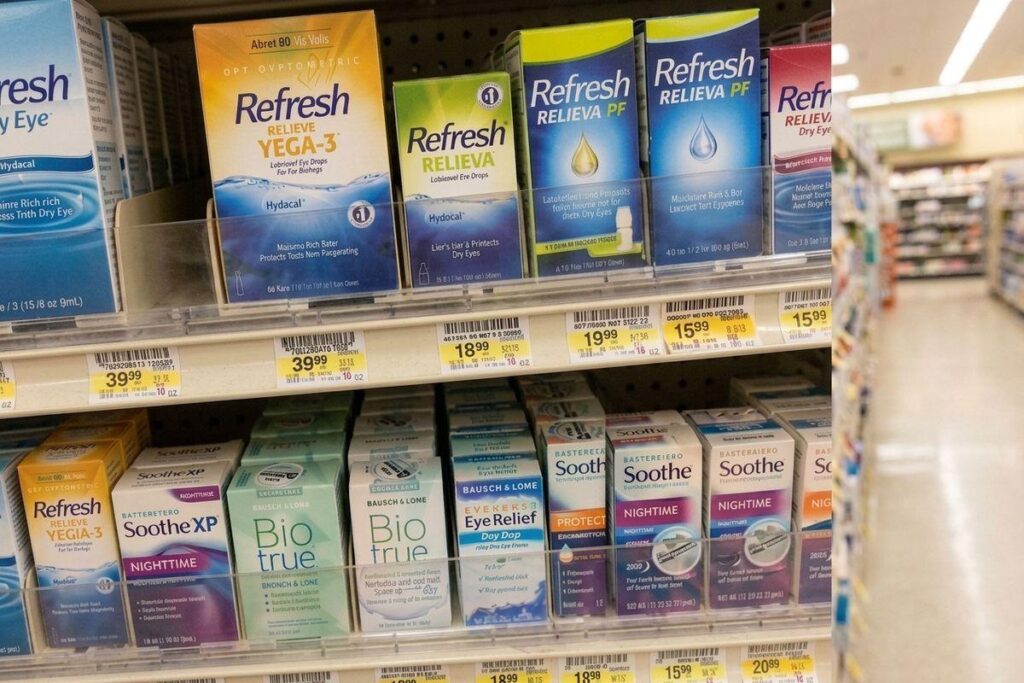
Staring at screens or working in dry environments often leaves your eyes feeling gritty and tired. You may grab some eye drops from the shelf, hoping for comfort, but the dryness comes right back. What can you do?
The best eye drops for your dry eye depend on whether you lack aqueous moisture or need more oil to stabilize your tear film. Not every formula works the same way, and picking one at random can leave you spending money on something that barely touches your symptoms.
Why Not All Dry Eye Drops Are the Same
Dry eye generally falls into 2 categories:
- Evaporative dry eye happens when your tears disappear too quickly, usually because the oil layer in your tear film lacks balance.
- Aqueous-deficient dry eye happens when your eyes simply don’t produce enough moisture to start with.
These two types call for different solutions. Oil-based drops can help support the tear film in evaporative dry eye, while more water-based, hydrating formulas tend to work better for aqueous deficiency.
Notice your symptoms to help guide your choice. Pay attention to when the dryness hits, how long it lasts, and whether your eyes feel scratchy or just plain tired. For example, if you’ve noticed your eyes feel especially dry first thing in the morning, there are solutions to help address that problem.
Eye Drop Types and What They Do
Walk down any pharmacy aisle, and you’ll see dozens of boxes promising relief. You’ll need to take a closer look to figure out what each type actually does for your vision.
Artificial Tears
Artificial tears are the go-to for mild or occasional dryness. They have a thin, liquid formula that rinses easily and doesn’t blur your vision.
Grab these drops for quick comfort during the day. They work exceptionally well if your symptoms show up after long hours on a computer or in a heavily air-conditioned office.
Gel Drops and Ointments
When artificial tears wear off too fast to bring relief, gel drops could be the answer. They have a thicker consistency that stays on the eye longer, making them a solid choice for moderate dryness.
Ointments go one step further with an even stronger layer of moisture. Apply them right before bed to give your eyes a longer window of hydration while you sleep, as they can temporarily blur your vision.
Preservative-Free vs. Preserved Drops
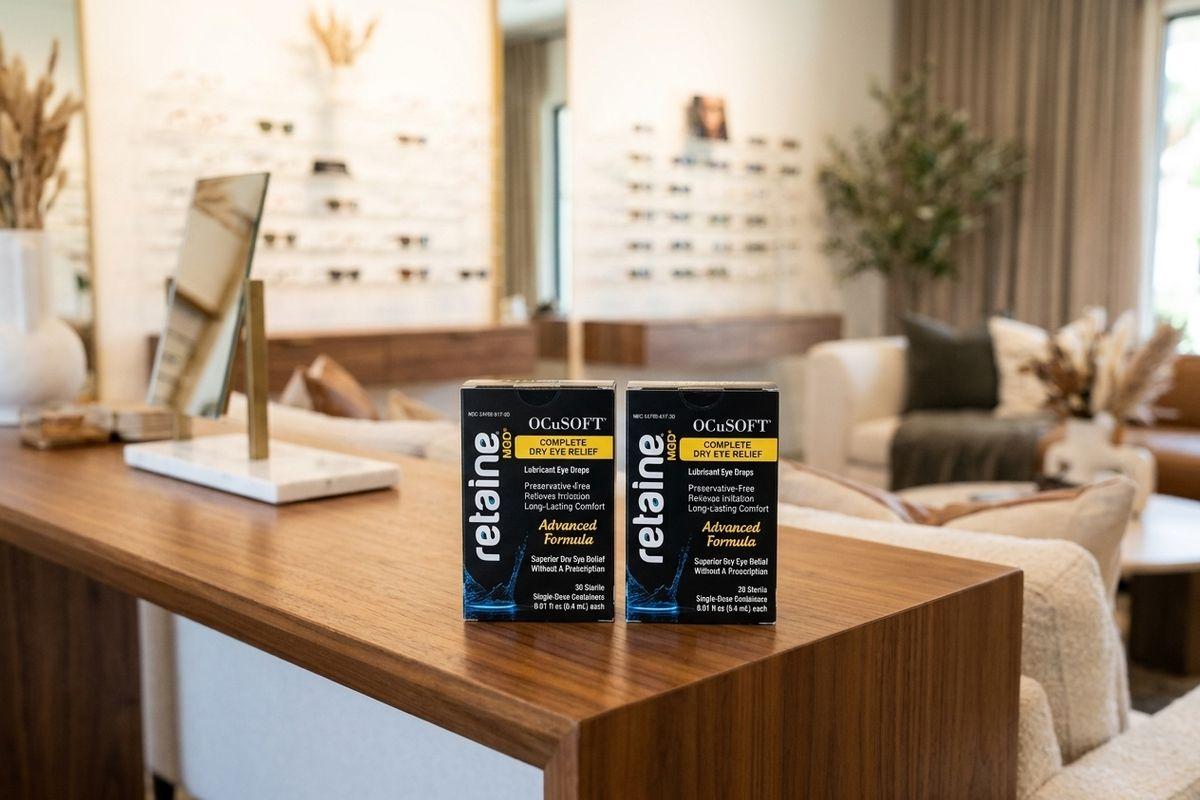
Many standard eye drops contain preservatives that help extend shelf life. That works fine for occasional use, such as fewer than 4 times a day. But if you’re reaching for drops frequently, those preservatives can start to irritate already-sensitive eyes.
Preservative-free drops come in single-use vials and skip that potential irritant altogether. They’re worth considering if you use drops often, have sensitive eyes, or are recovering from eye surgery. Contact lens wearers with dry eye should also look specifically for drops labeled safe for use with lenses, since not all formulas play nicely with contacts.
Drops to Avoid for Dry Eye Relief
The redness-relief drops you see front and center at most pharmacies are tempting, but they’re not the right tool for dry eye. Ingredients like tetrahydrozoline and naphazoline work by narrowing the blood vessels in your eyes. That clears the red, but it doesn’t address the dryness, and with regular use, your eyes can become dependent on them and grow redder between doses.
It’s also a good habit to check the FDA recall list before trying a new brand. There have been recalls tied to contamination concerns in recent years, and a quick search before you buy can save you from a bigger problem down the line.
When Eye Drops Alone Are Not Enough
Listen to your body and watch for signs that something deeper needs attention. Call an optometrist if you experience any of these common symptoms:
- Using drops more than 3 times a day with little relief
- Noticing persistent redness or odd discharge
- Experiencing blurry vision even after applying hydration
Blocked oil-producing glands along your eyelids may be the root of the problem. This condition disrupts your tear film entirely and requires a closer look from an eye care professional.
Schedule a dry eye evaluation and uncover the actual source of your discomfort. An optometrist can look past surface-level symptoms and recommend a targeted approach, such as prescription drops or punctal plugs.
Say Goodbye to the Gritty Feeling
Finding the right drops can bring you immediate comfort, but you deserve long-term relief from daily irritation. Stop wasting money on formulas that barely touch your symptoms, and let us put you on the path to comfort.
Reach out to OPT Optometric Palm Springs and schedule your dry eye evaluation today. If your drops haven’t been cutting it, it may be time to find out why. Book your appointment today and get back to your life with refreshed vision.